
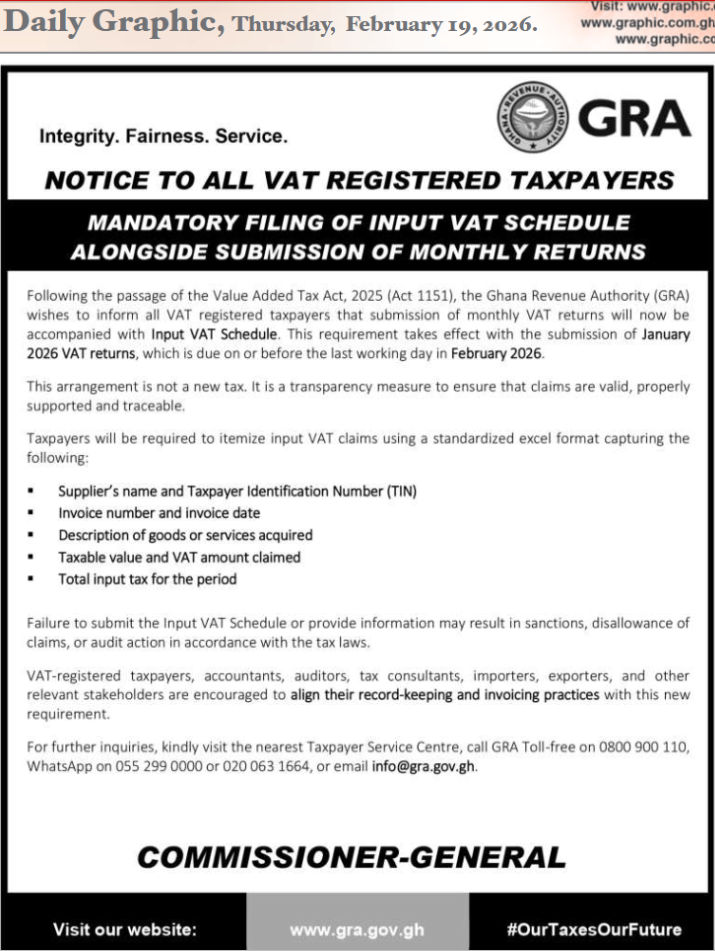
The Ghana Revenue Authority has issued a notice informing the public about an update to VAT returns. The notice changes the way VAT returns are filed effective from January 2026. The notice can be seen below:
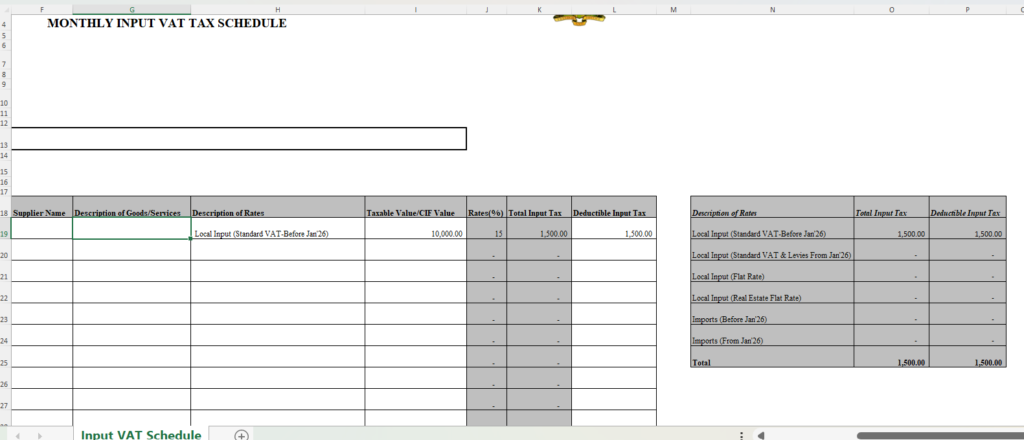
Taxpayers are now required to provide specific information relating to input VAT. The required information includes the invoice date, description of the transaction, applicable VAT rate and the input VAT being claimed. Basic checks are performed such as ensuring that the input VAT being claimed does not exceed the input VAT paid.
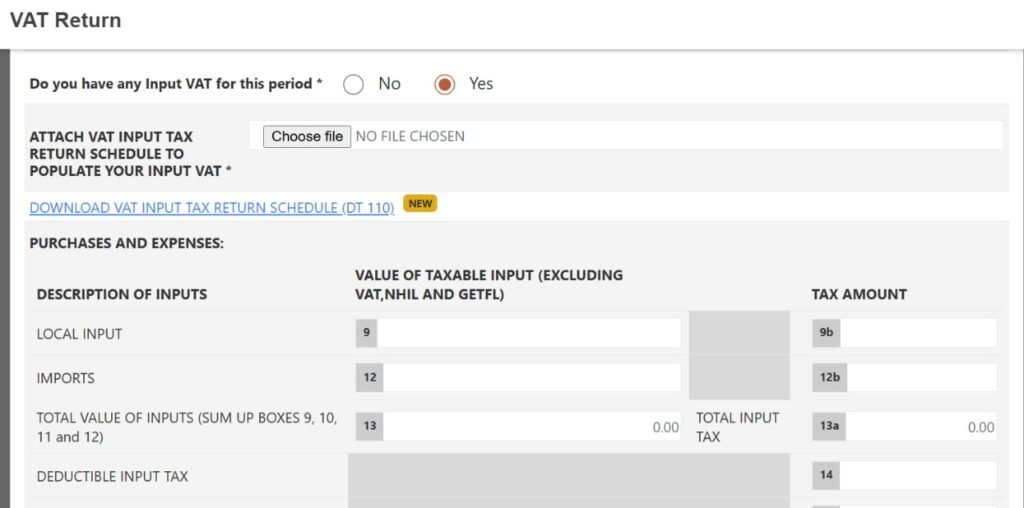
Although the GRA has threatened sanctions in the notice, it has made it impossible for anyone intending to claim input VAT to bypass the schedule. To view the schedule, you have to indicate that there is input VAT for the month. Once that is done, the schedule appears. The taxpayer must download the schedule, complete it, and upload it onto the portal. Details of the input VAT in the schedule will be populated on the VAT return. That is, the taxpayer can no longer manually complete the input VAT section of the VAT return as was done in the past.
This new approach increases the administrative burden for taxpayers. It is however, a necessary tool for the GRA to be sure that taxpayers have the supporting information before they claim any input VAT. We expect that it will make it easier for the GRA to perform desk audits on these returns.
It is hoped that the GRA will implement measures for the input VAT to be prepopulated on the VAT returns. That is, instead of manually completing the schedule, which can still contain errors and non-existent invoice details, the GRA should be able to validate these invoice details. This will work similarly to how our current withholding tax credits appear on the tax portal.
In other countries such as Kenya, the input VAT details of taxpayers appear on their tax portals and it is only those transactions that can be used to claim input VAT. Input VAT can only be claimed when it is declared as output VAT by the supplier. Kenya has even recently extended this validation system to corporate taxes with expenses being validated.